

YOU don’t have to be a high-powered politician to know the importance of adhering to the Official Secrets Act.
I have worked in three departments of the Civil Service and, in each, one of the first things I had to do after joining was learn about the Act. I then had to sign documents pledging not to pass on departmental information to third parties. It was always stressed as to how vital this was, no matter how lowly a role you played in the organisation.
Even chatting about things you wouldn’t class as important could get you into trouble. While working as a shorthand typist at Middlesbrough Unemployment Benefit Office in the 1970s my mum came home and mentioned to my dad that the nicest, sunniest, most well-decorated room in the building was home to the computer, while the workers had to make do with dingy offices.
Dad, who wrote a column for a regional newspaper, mentioned this to raise a laugh from readers. The day after publication Mum – who had signed the Official Secrets Act – was hauled before bosses and given a dressing down, as though she’d sold secrets to Russia. She was quite shaken by it.
As the furore over allegations that both Lord Mandelson and Andrew Mountbatten-Windsor leaked sensitive information to Jeffrey Epstein rumbles on, it made me think about that incident with Mum – ridiculously trivial in comparison – and ponder as to how these revelations will be dealt with.
While most employers do not ask staff to sign a pledge to keep company secrets, many, like the American-owned company I work for, stress the importance of confidentiality and hold regular courses in security and data protection. Yet, nowadays, in public settings, many people don’t seem to consider such things.
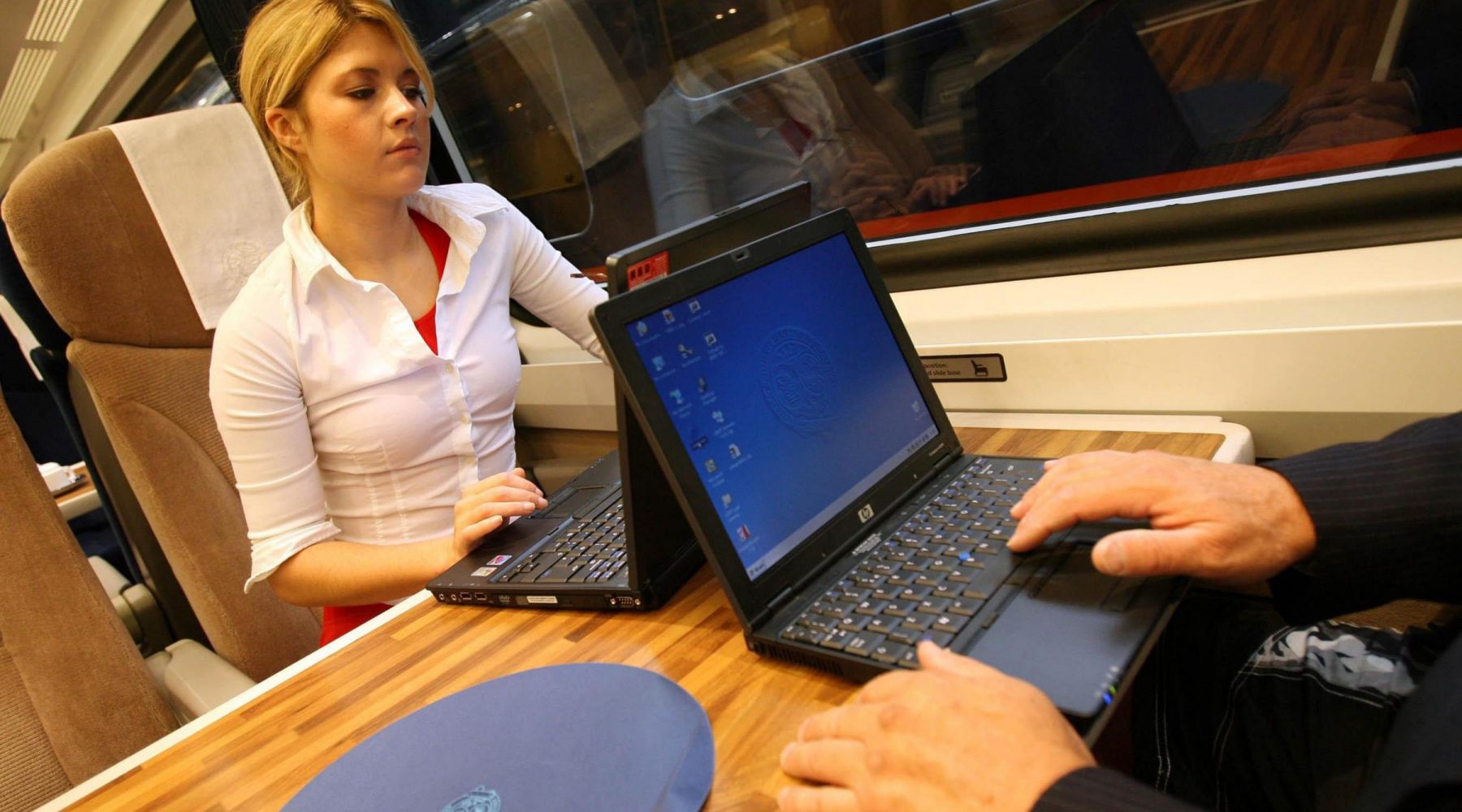
I travelled by train to London recently, sitting close to a man who, to my amazement, held a work conference call in full hearing of everyone around him. He loudly rattled off details of a business deal he had recently made with China , and was particularly vocal as to how one particular firm was holding back negotiations. “They don’t like the price, that’s the stumbling block,” he bellowed. He wasn’t far removed from Bob Mortimer’s Train Guy, mocking loudmouthed travellers spouting nonsensical business jargon.

Cafes are not secure environments for using laptops. Picture: Pixabay
It’s incredibly easy to glean information from other people’s laptops and phones on trains. One day, moments after boarding a carriage for the four-hour journey from Oxford to York, the woman sitting in front of me – who I couldn’t see- suddenly, without consultation, pulled down the shared window blind, depriving my husband and me of a view. I muttered a few choice words and pulled it back up, and she tugged it back down. I looked through the gap between our seats to see how long I would have to put up with it, and discovered within seconds her name, job title and where she worked in York. I could easily read the email she was writing.
Last year the newly-installed chief executive of NHS England Sir Jim Mackey was pictured in a national newspaper snoozing in front of his open laptop in a first-class train carriage travelling from London to North-East England. The paper reported that he left his laptop on the table unlocked when he went to the toilet. Work documents were photographed from a neighbouring seat.
Being the boss, I doubt very much whether Sir Jim had to account for himself to a scary panel of superiors, but he will have learned a valuable lesson.
Then there are all those people working on laptops in cafes, which is hardly a secure environment.
Read More:
- Sedge standing on brink after fine home win as Rovers pay for first-half shocker
- Ninth man jailed for sexual offences against child in Bradford
- Plans to develop two prominent sites on key Bradford corridor revealed
It remains to be seen what will happen to Lord Mandelson and Andrew Mountbatten-Windsor, but if the system works as intended, they should throw the book at each of them.
And in case you’re left wondering, I won the train window skirmish.