

An organisation is helping to build a district‑wide capability that will shape Bradford’s industrial future for decades to come.
By Annette McIntyre
The initiative is being led by Bradford Manufacturing Futures – a collaborative, manufacturer-led partnership in the Bradford district aimed at supporting the local manufacturing sector’s transition to Net Zero by 2038.
BMF aims to serve as a focal point for the region’s 1,200 manufacturing businesses – helping them to adapt to meet decarbonisation goals while maintaining competitiveness.
The group was launched in 2023 to bring together manufacturers who wanted to collaborate on the big challenges shaping the sector – particularly decarbonisation, rising energy costs, and long‑term competitiveness.
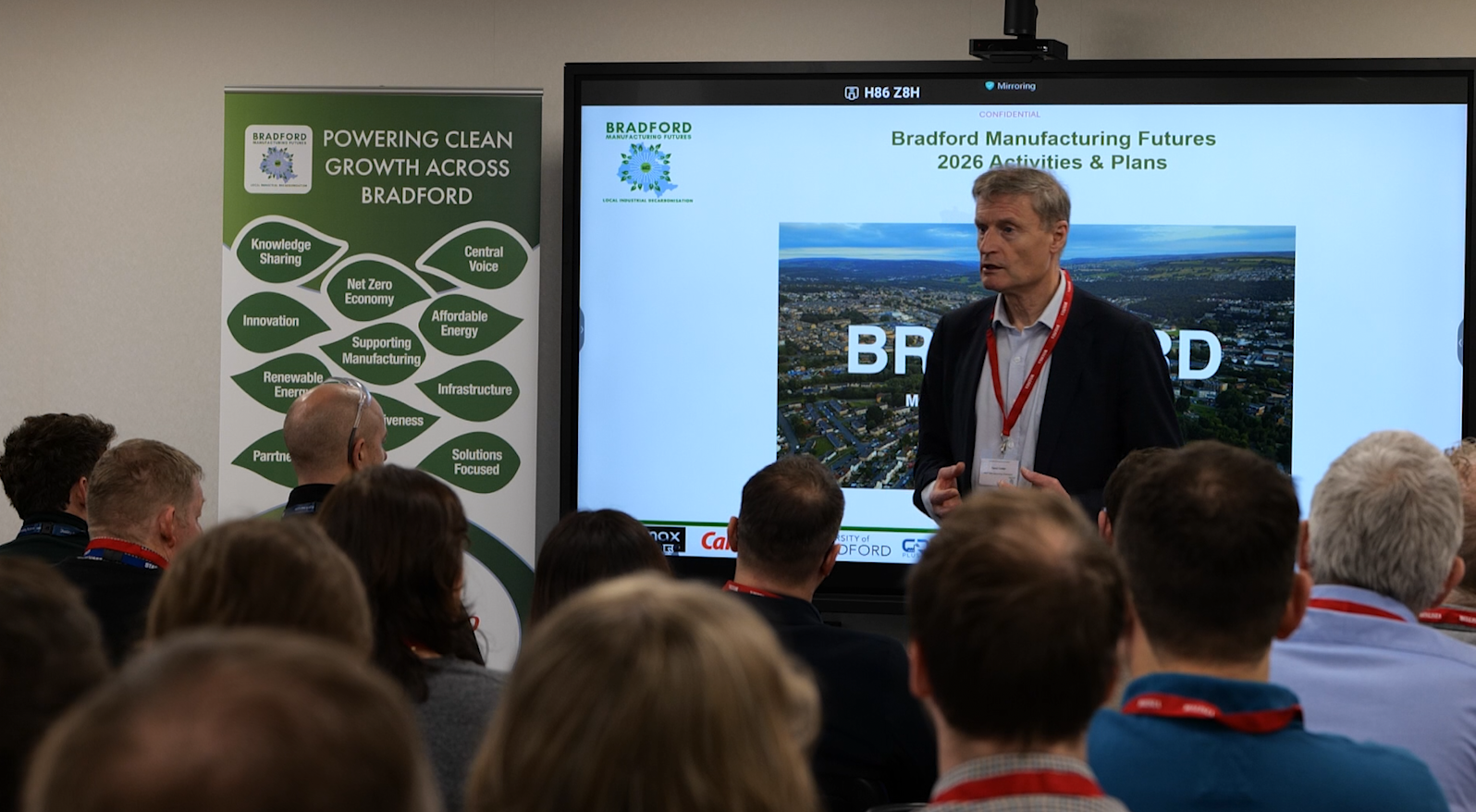
BMF chairman David Calder said: “We put together a successful bid for Government funding to look at the opportunities and challenges facing the sector. We were inspired by the example of Bradford Manufacturing Weeks, where many industrial companies in the district get together each year to showcase the great career opportunities in the sector.
“We are a manufacturing-led organisation, and the needs of our members will always come first. Our aim is to help Bradford’s manufacturers become cleaner, more resilient, and better connected. We do that by creating a space for collaboration, practical problem‑solving, and leadership development, including our ‘Sustainability Leaders of the Future’ group, which brings emerging talent into the conversation early.”
David explained that Bradford Manufacturing Futures operates as a collaborative network rather than a traditional organisation. It works through a small core team supported by partners, specialists, and the collective expertise of member businesses.
He stressed the vital importance of decarbonisation in Bradford industries. “Decarbonisation is essential for long‑term sustainability, but the short‑term reality is that many businesses are grappling with volatile energy prices and operational pressures. Our work helps firms navigate both: reducing carbon while also improving efficiency, resilience, and cost control.
“By convening leaders, sharing best practice, investigating local collaborative opportunities and supporting emerging talent, we’re helping to build a district‑wide capability that will shape Bradford’s industrial future for decades.”
Bradford Manufacturing Futures supports businesses through:
- Peer learning ; sharing what’s working across different manufacturing environments
- Practical tools and diagnostics; helping firms understand their carbon footprint and identify priority actions
- Access to expertise; from energy efficiency to low‑carbon technologies
- Leadership development; including the “Sustainability Leaders of the Future” programme, which equips early‑career professionals with the skills and confidence to drive change
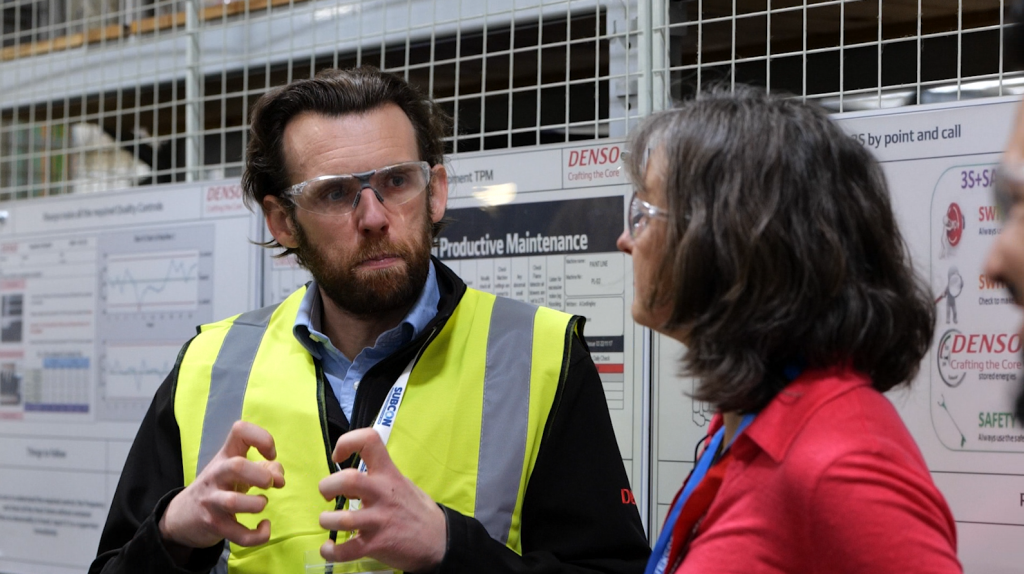
“Our approach is grounded in real‑world implementation, not theory,” David said. For example, we have identified five Clean Growth Hubs within the district, where we believe manufacturers can collaborate to find local solutions that will help achieve Net Zero,” David said.
BMF is already making inroads in the area of the circular economy and green manufacturing.
“We’re proud of the growing number of members exploring circularity, from materials reuse and waste reduction to product‑life extension and energy‑efficiency projects. Several firms have taken significant steps to reduce energy consumption in response to rising costs, and those short‑term actions are now forming the foundation for longer‑term sustainability strategies,” David said.
“I’m also proud of how openly businesses share their learning with each other; it’s a real strength of the Bradford manufacturing community. Invariably, the most popular activities we organise involve site visits, where manufacturers can see for themselves what their neighbours are doing.”
The organisation has already worked with a wide range of manufacturers across the district, including advanced engineering firms, food producers, textiles, chemicals and precision manufacturers.
“The consistent feedback is that the group provides something they can’t get elsewhere: a trusted space to talk honestly about challenges, learn from peers, and access support that is practical and relevant,” David said.
“Recently, Denso Marston, one of our lead manufacturers who supply to the automotive industry, hosted an open day, showing some fantastic examples of what can be achieved in energy efficiency and cost reduction. This was really appreciated by those who attended, particularly other manufacturers, who told us that the work has helped them respond more confidently to rising energy costs while also planning for longer‑term sustainability.”
Businesses in the city are receptive to the work being done by BMF, said David, describing the city’s manufacturers as “pragmatic and forward‑looking”.
“The recent volatility in energy prices has sharpened interest in efficiency, resilience, and decarbonisation. Once businesses see that our work is grounded in operational reality, they engage quickly and enthusiastically,” he added.
He stressed that Bradford had real strengths – a diverse manufacturing base, a strong culture of innovation, and leaders who care deeply about the district’s future.
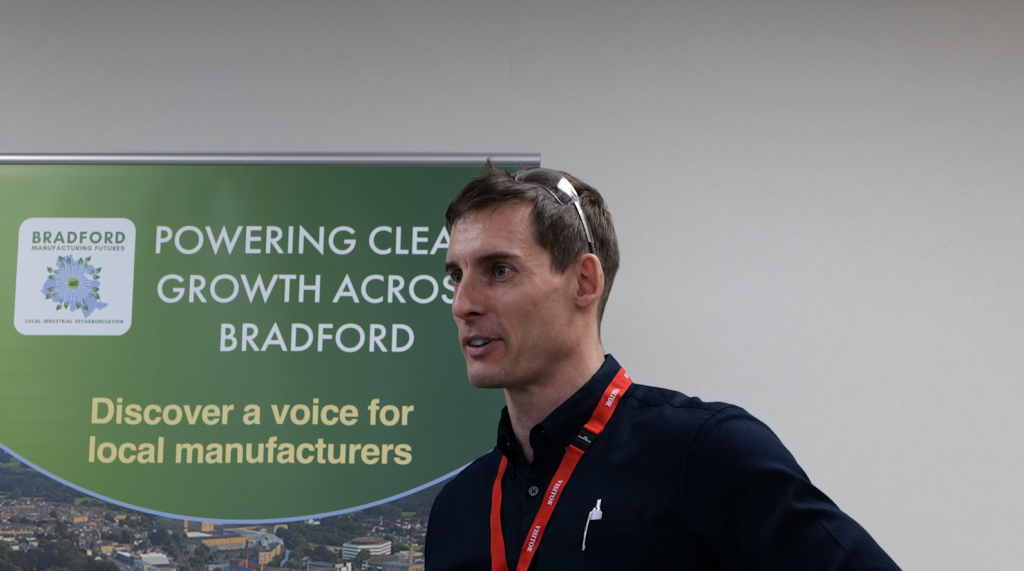
“The challenge is that many firms operate in older buildings or energy‑intensive processes, which can make decarbonisation more complex, especially when energy prices are unpredictable,” he added. “Much of the decarbonisation of industry will come from fuel-switching, however there is little appreciation outside of industry of the huge costs in capital investment up-front and also in the ongoing energy costs. Unless these are addressed in a pragmatic way, my fear is that we decarbonise by exporting manufacturing, and jobs, abroad. BMF sets out to address these challenges, which also create opportunities for shared solutions, collaborative investment and district‑wide innovation.”
When it comes to emerging technologies BMF is seeing strong interest in energy‑monitoring and optimisation technologies, low‑carbon heat solutions, advanced materials and process improvements, and digital tools for tracking emissions and resource use.
“We are also keeping a close eye on several interesting schemes being developed in the city right now,” David said. “For example, the Bradford Low Carbon Hydrogen facility is being built close to the city centre. Although primarily intended for vehicles, we will maintain a watching brief to see whether this can provide a decarbonisation solution for some manufacturers in the district. Similarly, 1Energy’s Bradford Energy Network will generate heat using large source heat pumps. The centre is being built on Thornton Road, close to some of the city’s food manufacturers, and again we will be looking to see opportunities to link up with this scheme.”
David described the energy network as “a brilliant scheme” – and one which is quite common in European cities but not so common in the UK.
He said the heat plant was basically “a massive heat pump”. Initially it will link up to buildings belonging to Bradford Council, Bradford University and Bradford College, but then the plan is to keep extending it out and to get others to connect into it.
“Now the great advantage for manufacturers here is if you connect into it you could do two things – you could take heat from it or you could add heat into it,” David said. “So a lot of manufacturers maybe have some waste heat from a process that they might be able to contribute into this scheme.”
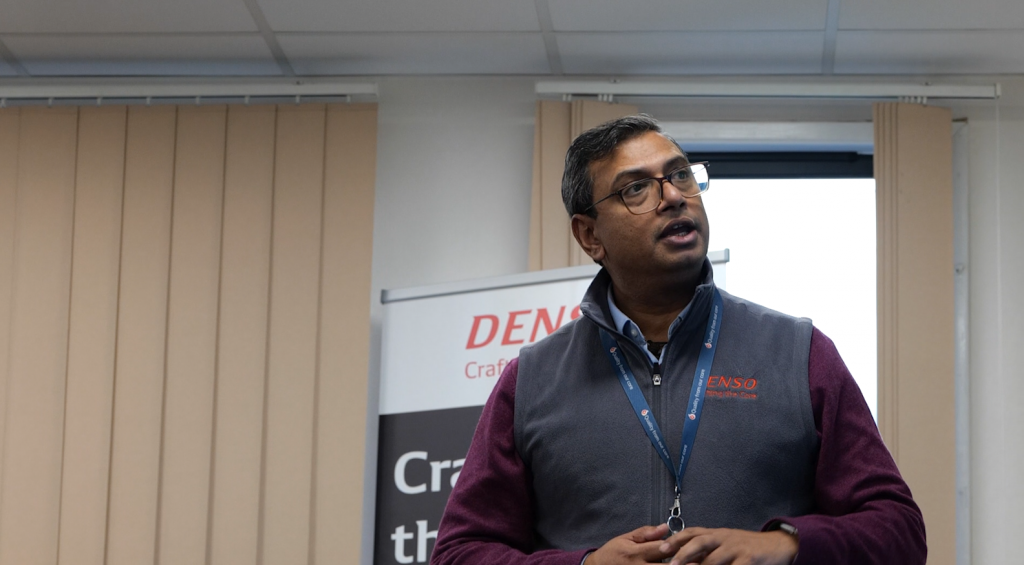
He said the scheme will bring efficiencies and savings across the board and the more that they can expand it out of the center the better as most manufacturers are on the outskirts of the city.
He added: “If you go to Scandinavian and some of the German cities a lot of them have got heat networks supplying public buildings and also domestic housing. And I think that could be the case for this if a housing developer decides to build some houses and it’s close by then it would make sense to look at this as a possible source of heat for houses as well.”
As in so many areas automation and AI are having an impact.
“Automation and AI are helping manufacturers improve quality, reduce waste, and make processes more energy‑efficient, all of which matter even more when energy prices are high,” David said. “They also help address skills shortages by automating repetitive tasks and freeing people to focus on higher‑value work.
“Bradford was built on the back of manufacturing in the city, so our manufacturers have always been innovative. In that respect, there are always opportunities to modernise operations and strengthen the district’s reputation for advanced manufacturing.”
But David also stressed the importance of training the future workforce to help manufacturers meet their sustainability goals.
He said: “Skills are central to everything we do. Apprenticeships and training partnerships help build the future workforce and ensure that manufacturers have the capability to adopt new technologies and deliver on sustainability goals. However, it’s not just new skills that are important. For example, the demand for electricity will increase massively in the future and we will need to increase the number of electrical engineers and technicians to match.
“Our ‘Sustainability Leaders of the Future’ group is a key part of this, giving emerging leaders the confidence, networks, and insight to drive change within their organisations.”
Now BMF wants to deepen its support for manufacturers by expanding its peer‑learning network and strengthening its work on decarbonisation.
“We particularly want to grow our membership among SMEs and recognise that to do that we need to demonstrate that we can provide pragmatic solutions to the problems that they are facing right now, as well as looking further ahead,” David said. “We have also developed good relationships with energy infrastructure providers and are looking at collaborative projects that look at addressing some of the challenges ahead in a way that will benefit them as well as our own industrial partners.
“Another major focus will be growing the ‘Sustainability Leaders of the Future’ programme so that Bradford builds a strong pipeline of talent ready to lead the transition to a low‑carbon economy.”
When BMF was launched there were nine similar schemes across the UK – but the Bradford scheme is unusual because it is city based whereas most of the others cover large areas.
The Bradford scheme is also manufacturing led rather than being initiated either by the local authority, universities or colleges.