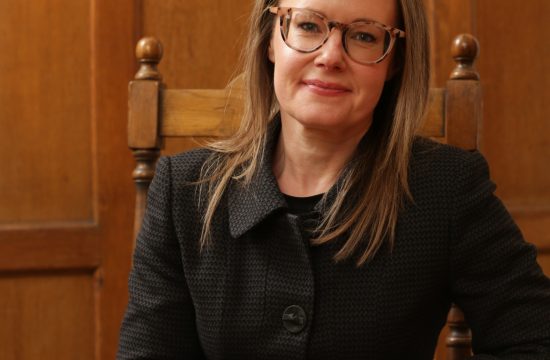



Even before she knew she wanted to be a lawyer, the principles of justice and equality resonated deeply in Sarah Khan-Bashir MBE.
At the age of 13, the words and deeds of one of the most iconic fictional lawyers, Atticus Finch, struck a chord with her when she first read To Kill A Mockingbird.
One particular line stood out to her: “You never really understand a person until you consider things from his point of view … until you climb into his skin and walk around in it.”
It is a quote that she has taken with her throughout her life as a solicitor and as a community champion.
“The book had a massive impact on me. And it has had a massive impact on what I’ve done, on the people I work with, the people I manage; we don’t judge anyone”
Sarah Khan-Bashir MBE
Sarah set up and runs a very successful Bradford firm SKB Law, specialising in family law, but she also devotes a lot of her time to working with the community, and in particular, helping young people to find their way in life.
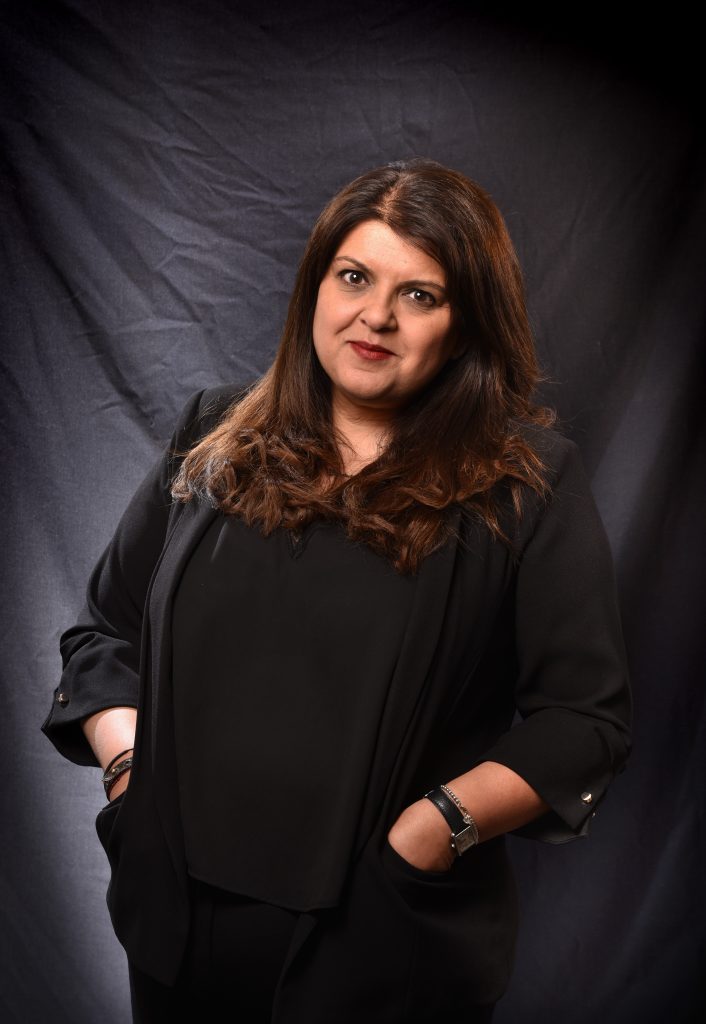
The work she has done with the charity Mosaic for the last 12 years, mentoring children at schools, led to her being awarded an MBE.
And it also inspired her to set up her own initiative to help get young people ready for the workplace called The Academy, which was one of the major factors in her receiving the Community Contribution Award in the Bradford Means Business Awards this year.
“I’m passionate about giving back to the community. It’s a big thing to me. It comes from my faith. I don’t think I’m in this position of running my own law firm because god likes me above everybody else, I think it is a duty on us. We’ve been given these opportunities and chances, and it’s a matter of what you do with it,” she said.
For Sarah, the road to becoming a lawyer was not something that was clearly mapped out for her, and her own lack of role models and guidance, when she was considering a career, is one of the reasons she is so passionate now about helping others at the key point in their lives.
She was born and brought up in Sheffield. “My dad, being a first-generation migrant to this country, wanted the best education for his children,” she said.
“He had a very good career in Pakistan, but at that time British education system was the best in the world. He always stressed on us whatever you do, just get a good education. There weren’t really role models for me at the time, so when I did my A-levels and didn’t get the grade for medicine he said chemistry, do chemistry.”
She ended up doing her degree at Sheffield Polytechnic, and halfway through, she married Nadim Bashir, who lived in Bradford.
After completing her degree, she struggled to find the right kind of job in the north, and her husband suggested she could try law.
“I didn’t know at the time, but it’s something I make sure everybody knows about it now. There is a conversion course so any degree you have if you decide you want to go into law you do a one academic year conversion,” she said.
“Even today, not many people are aware you can change career and direction just like that, and that’s one of the aims of talking to young people, to tell them you’ll probably change your career three or four times in your lifetime because the world has changed, and don’t be afraid of that.”
Sarah Khan-Bashir MBE
She enrolled at Leeds and eventually got her first training contract with John Kelly and Co in Bradford, where she worked for around three years.
She was then appointed to what was a very challenging role for an Asian woman as force solicitor at West Yorkshire Police
“The force was very male orientated at the time. I remember one meeting I was at, we were sat waiting for around 15 minutes, and I said are we going to begin the meeting, and they said they were just waiting for the force solicitor to arrive, and I said I’m actually here,” she said.
“And going to court and asking were a courtroom was, I’d be asked: ‘are you the defendant?’ It’s these kinds of perceptions you have to try to break down.”
She said there was no doubt that diversity had improved hugely, but the challenges were probably a bit more subtle. “And I still walk into a lot of boardrooms, and it is mainly men there, with not much representation of diversity,” she added.
Despite the challenges, Sarah thrived in the role and worked with the police for seven years. She is particularly proud of the creation of a protocol to manage the new type of civil orders brought by police know as sexual offence prevention orders, which were introduced by the then Home Secretary David Blunkett.
“The police could apply for these orders. But when it was brought in, no one knew how to deal with it. So with the help of key members of the police, the probation service, the courts, we had one of the first ones here, and we got everyone together and said we know what the end result is – protection of vulnerable people from sexual predators – so let’s build a process”, she said.
“So we put together a protocol – West Yorkshire was the first to do it. We then worked with other forces who adopted it. I was very proud of bringing together key people to do this.”
After seven years, Sarah was becoming increasingly aware of the fact that as well as the legal work there was other work in the community, especially in Bradford, that needed addressing, and that she was unable to do within her existing role.
“It might have been people applying for information to assist them with honour crimes, or domestic violence situations; I could see there was work to be done with these individuals which I wanted to do.”
She set up Shire Solicitors with a business partner in 2007, becoming managing partner of the firm, now known as SKB Law, in 2016.
It was a challenge initially finding work, especially in Bradford, where she said it was very much about being connected and who you know.
“But we stuck at it and have created our own niche. For us, when I set up, I wanted to ensure we set up a first-class service for every client, however they had come to us,” said Sarah.
“It’s been a challenge, not having connections who might offer work our way, we’ve had to do it off excellent service, and I think the reviews and feedback we get speaks for itself.”
She has long been an advocate of women’s rights, and a lot of the work she has taken on since setting up the business has been focussed on helping members of society who are vulnerable and may not be aware of their rights.
“This goes back to when I was a trainee at John Kelly and Co. I did family law there and often find Asian and mainly Muslim women coming to me and taking their first step in doing something about a situation they were unhappy with. My very first client took her very first trip on a bus to come and see me, to say I am in this situation with my marriage and I can’t tolerate it anymore. And that was a brave thing for her to do.
“It never left that I really wanted to help others like her and get that message out. A lot of the messages are about knowing your rights, you don’t have to stay in a violent marriage, but also know your rights as far as marriage is concerned.
“A lot of the work we do is about not registering their marriage or only having a religious marriage and then becoming aware that they have very little legal redress if it comes to a breakdown in the marriage.
“It’s a shame that 20 years after that first case, I’m still getting women to try and understand those rights, but it’s still needed.”
She stresses that they SKB is very much about people understanding what options they have available to them, and always offers a free 30 minute no obligation session to assess people’s situations.
Alongside the legal work, Sarah is now spending a lot of her time working on a new initiative called The Academy, which she runs with Mandip Sahorta.
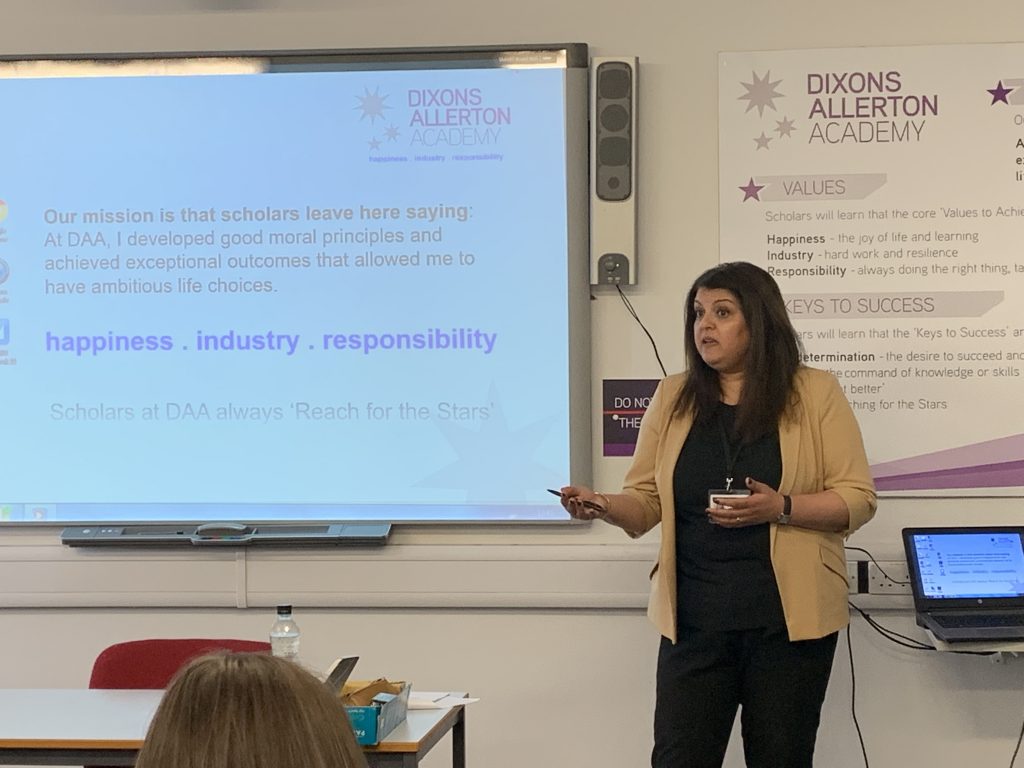
It was the logical next step for her after spending 12 years mentoring for Mosaic, the charity set up by Prince Charles with the intention of offering positive role models in places they might not be readily visible
“When I first turned up to talk to young people they thought oh, she’s a lawyer, she’s been to a fancy school, all of that, but when I broke it down, and said I didn’t have direction, I didn’t have guidance, and because of that I failed my A-levels, because I didn’t have a passion in what I was doing, but then you can turn everything around, a lightbulb might go off in that audience, and someone might think maybe I can do it,” she said.
But Sarah noticed that incredibly empowering as it was for young students to see these role models, there was a disconnect between this and making sure they were equipped with the skills they needed for work life.
“Mosaic was aimed at self-belief, inspiration and aspiration. But then we weren’t part of any programme that gave you the skills for employability. So I’d get young people coming to me for interview and things like the handshake, the eye contact the right kind of clothing, all of that was lacking,” she said.
“Rather than criticise or reject young individuals I wanted to work in a way to help them. We have some amazing young people here. Bradford is the youngest city. We have a sitting talent pipeline.
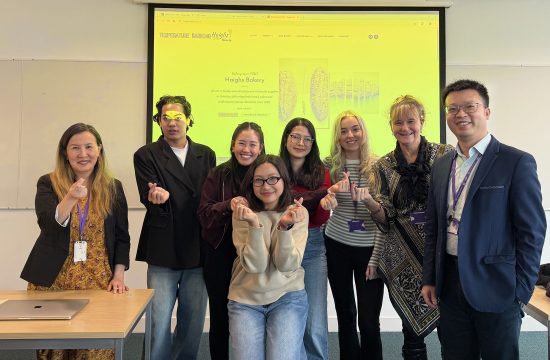
“So I’ve created The Academy to try and develop programmes to help them. Mandip was working for the Baroness Warsi Foundation when I met her. We spoke and she said would you like to do something about this. I said I would, so within a month we’d created a programme called The Unwritten Rules.
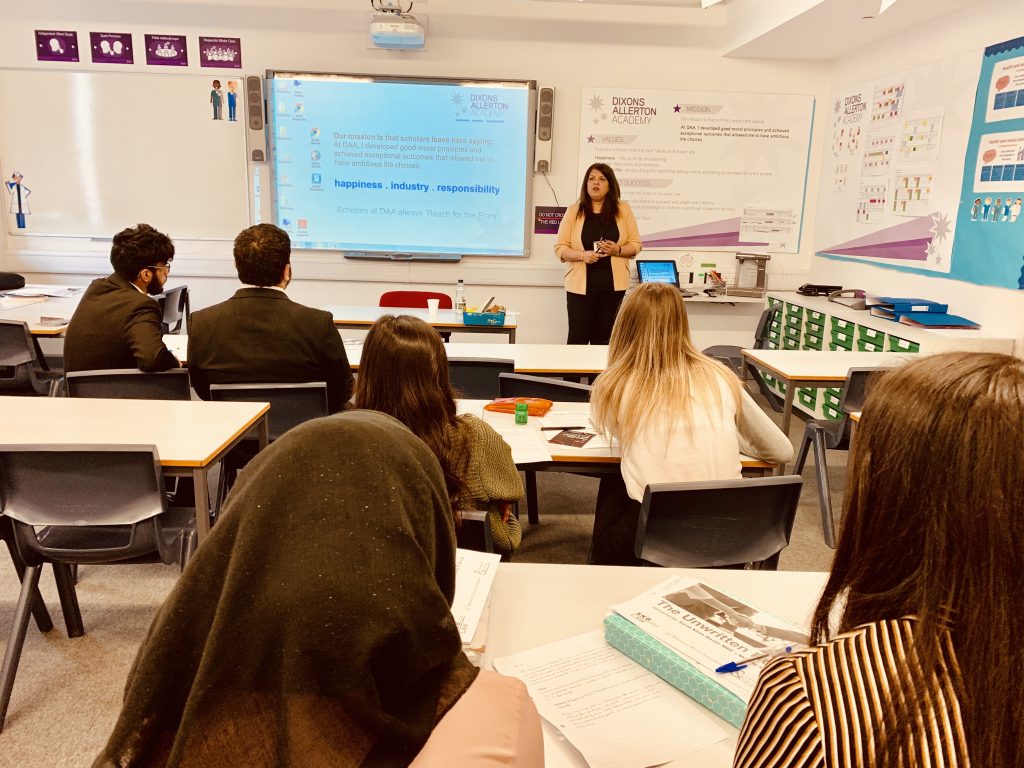
“We go into schools, we do a workshop broken into sections, like interview skills, networking, check eye conduct, how they conduct themselves, all the things I’ve learnt from interviewing young people we pass that on.
“The second day we take students to the business and they are interviewed by the HR or the partners or managers of that business. It can be quite daunting.
“The teachers at the schools will tell you its absolutely transformational,” said Sarah.
The one-and-a-half-day session has so far seen companies including BBC, ITV, and the Yorkshire Building Society taking part in the second day of the process.
“These young people, who by their own admission tell me I thought I was going to be interviewed by scary people, by the second day they are doing high fives, exchanging email addresses.
“The programme is breaking down barriers that aren’t really there. What Mandip and I are working hard on is to have every business to have a duty to invest in young people. I mean why wouldn’t they?”
Sarah is keen to work with other partners in the district to try and build better links and create permanent partnerships.
“That’s where I’m in the thick of it, trying to engage businesses to link up with the schools. We have amazing businesses in Bradford. These businesses are finding it hard to recruit,” Sarah said.
“It really is about bridging that gap. I’ve had meetings with the council and other organisations, and no one seems to want to collaborate.”
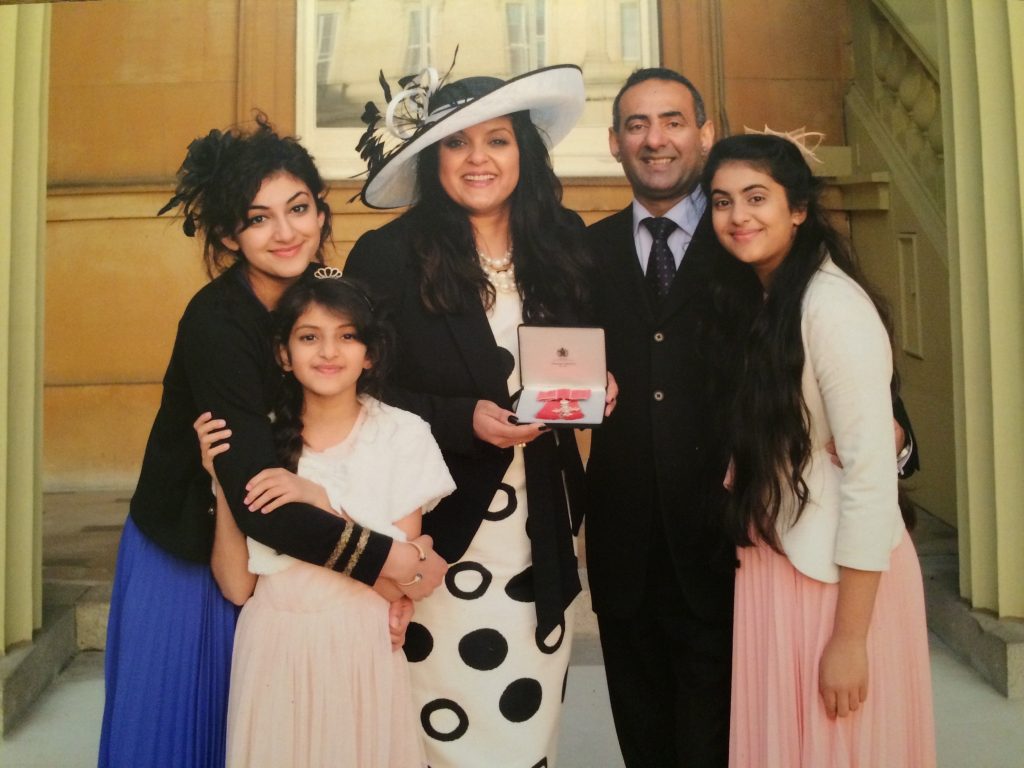
The mother of three daughters, Sarah is proud of the way they have turned out.
Her eldest Ammani, 24, is studying medicine at Manchester and is in the army. Shaan, 20, in London studying dentistry, and still at home is Aaisha, 14, who wants to be human rights lawyer.
“As a working full -time mum I often had massive amounts of guilt. I’ve always worked. When one of the girls told me when they were choosing their options ‘we’ve always seen how hard you’ve worked and it’s inspired us to do something’, that made up for feelings of guilt.”